


Book Release: Containment in the Middle East by Ehud Eilam (Potomac Books, 2019, USA)
National security affairs analyst Ehud Eilam examines the strategy of containment in the Middle East as it is currently pursued. For the United States, containment is a way to avoid war with Iran and thwart its nuclear weapons program. For Israel it has been a way to prevent a confrontation with the Palestinians in both the Gaza Strip and the West Bank. In other cases, containment is meant to weaken a foe without starting a war, as Israel did by bombing shipments of weapons to Hezbollah. Containment was also part of the war in Syria—because the West lacked the ability to overthrow Bashar al-Assad, though it cost the civilian population there dearly. Egypt has been trying to contain both its enormous economic hardships and ISIS, primarily in the Sinai Peninsula. Ultimately Eilam provides important and timely insights into the Middle East’s perennially fluid and volatile political environment. His insights and analyses will be of interest not least in the corridors of power both here and abroad. Read more
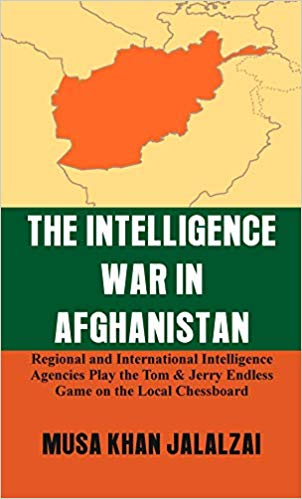 Globalisation continues to challenge our world at unprecedented speed. Technological innovations, changing geographical developments, regional rivalries, and destruction of national critical infrastructures in several Muslim states due to the US so called war on terrorism-all transformed the structures and hierarchies of societies. The idea of development of a nation that sounds on tripods that are food, shelter and security failed. The Edward Snowden leaks challenged policy makers and the public understanding.
  The central intelligence agencies have earned the wrath of the government for failing to sufficiently warn local agencies. Why do our secret intelligence agencies fail repeatedly? Is it because of the lack of adequate intelligence, the dearth of trained manpower in the intelligence sector, failure to apply latest sophisticated technology in surveillance, lack of proper intelligence sharing between the Centre and the states, lack of action on available intelligence, or the lack of sensible intelligence reforms?
  John A. Gentry and Joseph S. Gordon update our understanding of strategic warning intelligence analysis for the twenty-first century. Strategic warning—the process of long-range analysis to alert senior leaders to trending threats and opportunities that require action—is a critical intelligence function. It also is frequently misunderstood and underappreciated. Gentry and Gordon draw on both their practitioner and academic backgrounds to present a history of the strategic warning function in the US intelligence community. In doing so, they outline the capabilities of analytic methods, explain why strategic warning analysis is so hard, and discuss the special challenges strategic warning encounters from senior decision-makers. They also compare how strategic warning functions in other countries, evaluate why the United States has in recent years emphasized current intelligence instead of strategic warning, and recommend warning-related structural and procedural improvements in the US intelligence community. The authors examine historical case studies, including postmortems of warning failures, to provide examples of the analytic points they make. Strategic Warning Intelligence will interest scholars and practitioners and will be an ideal teaching text for intermediate and advanced students.
 Since the secret of Bletchley Park was revealed in the 1970s, the work of its codebreakers has become one of the most famous stories of the Second World War. But cracking the Nazis’ codes was only the start of the process. Thousands of secret intelligence workers were then involved in making crucial information available to the Allied leaders and commanders who desperately needed it.
 Written from a practitioner’s perspective, Intelligence in Regulation fills a void in international literature on regulation. The wide and largely disparate world of regulators is late to the idea of professionalising decision-making despite this need being well understood and ingrained in national security and, to a lesser extent, law enforcement.